Nelle cose più piccole
Cover for Celeste Valenti’s book on everyday Āyurveda practices. On the right, the original illustration without lettering.
Illustrator and visual artist
She draws dreams, archetypes and rituals: intimate images that carry an older, shared memory.
See the work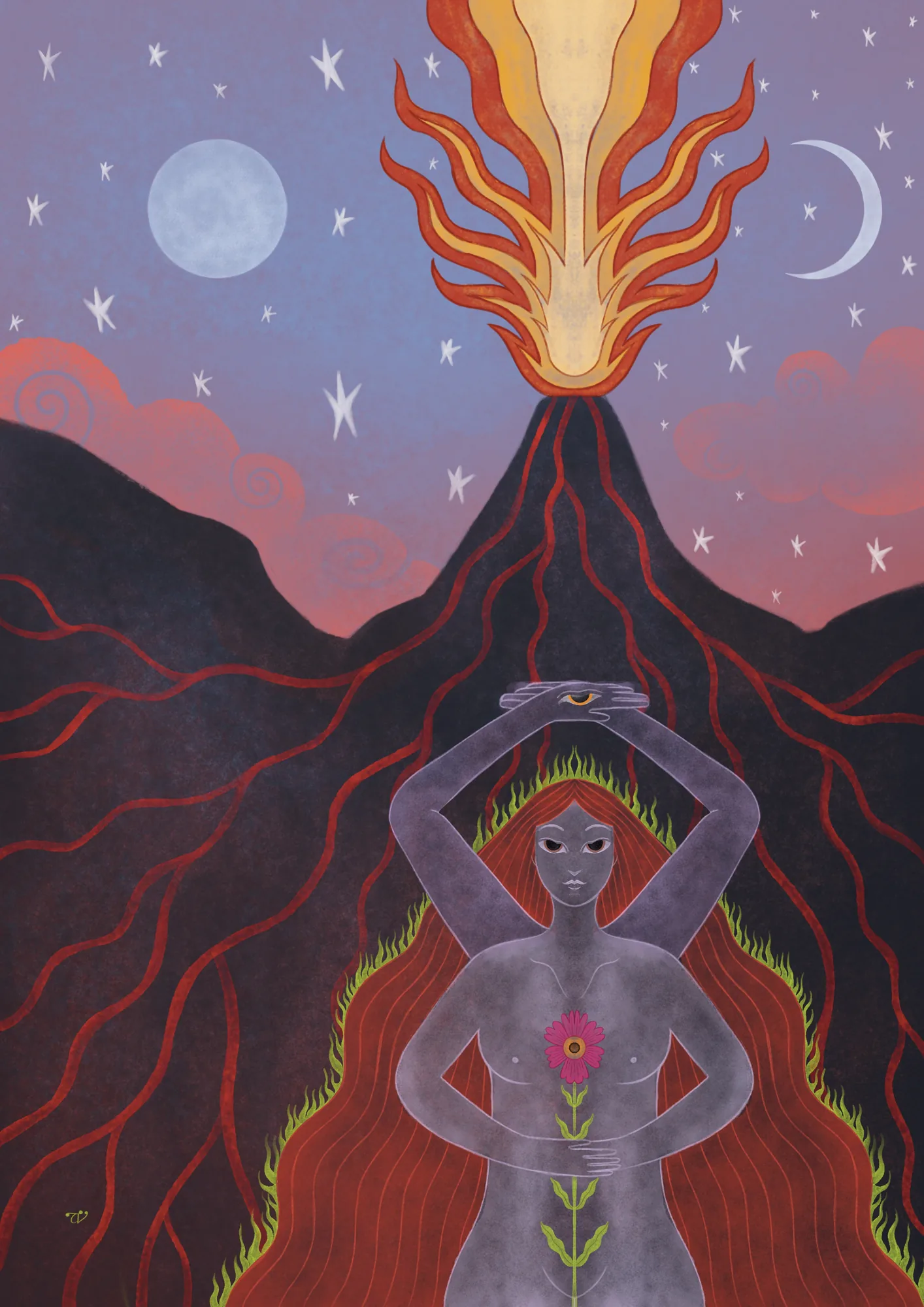
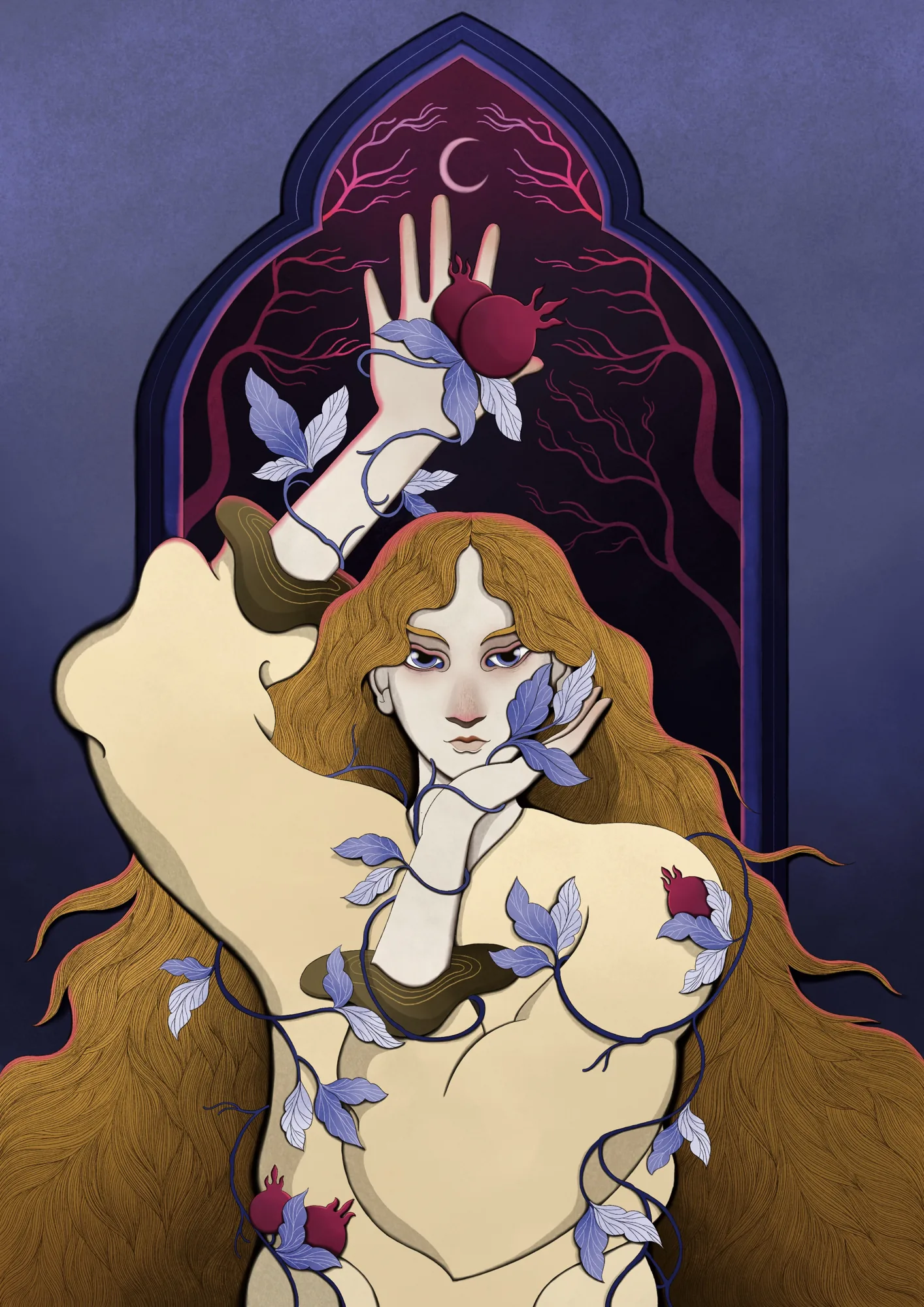
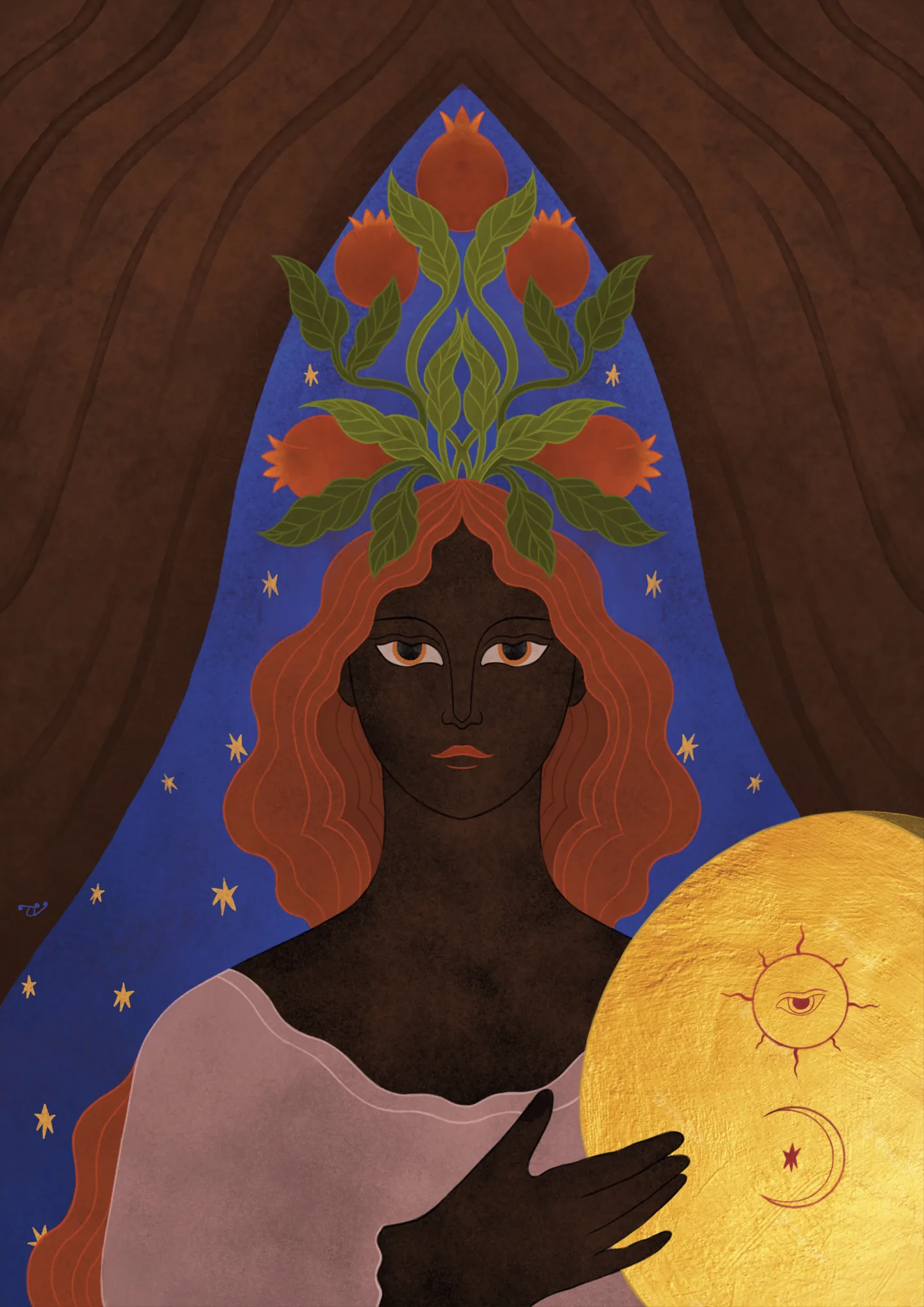
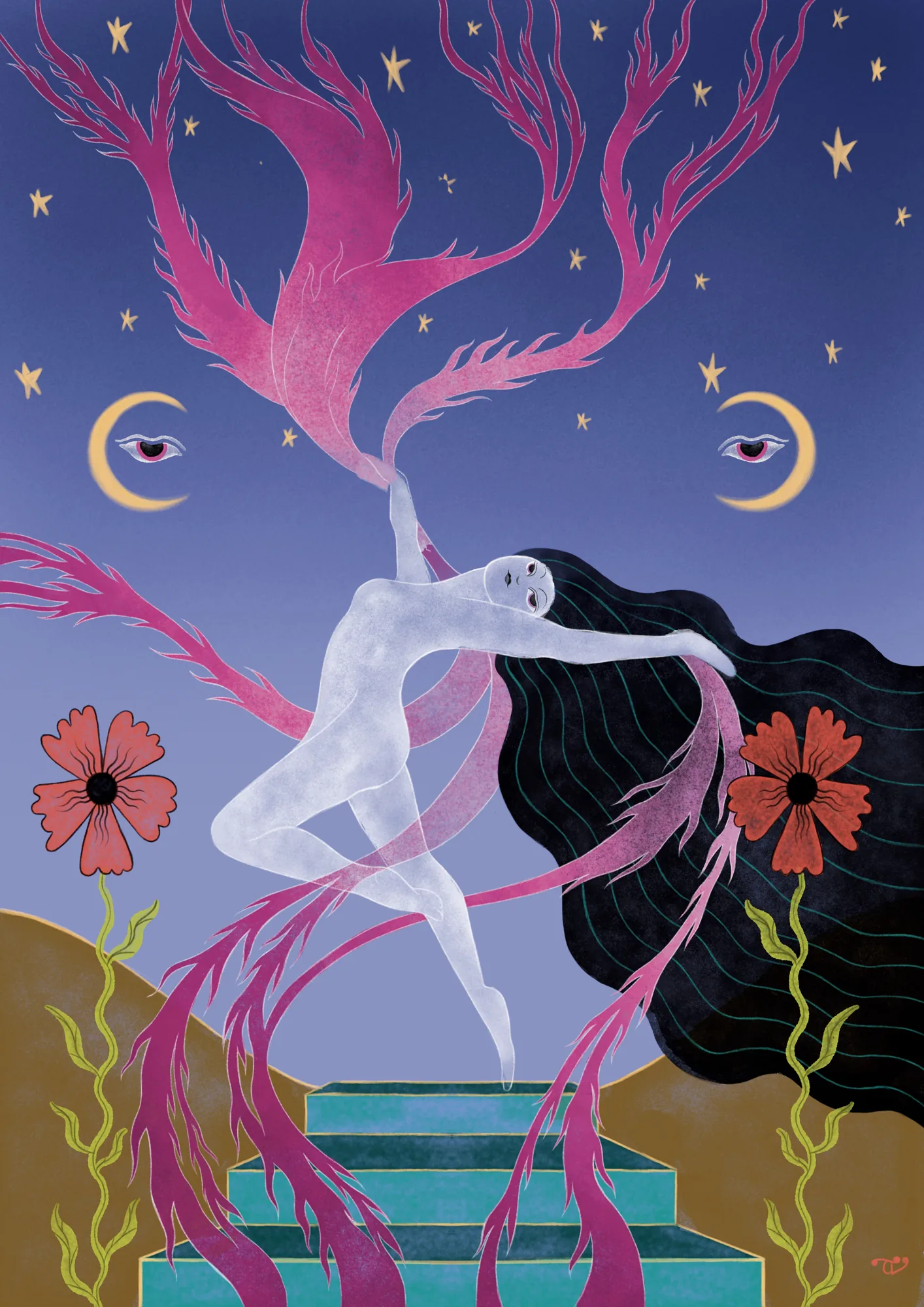
Digital works, 2023–2026. Tap a piece to see it full screen.
Cover for Celeste Valenti’s book on everyday Āyurveda practices. On the right, the original illustration without lettering.
The myth of Persephone as descent and return, told in pages where dream and underworld blur together.
A series of illustrations for the zodiac signs: suns, moons and mirrored figures.
Experimental animation and moving illustration.
2025
Contemporary art residencies in Puglia devoted to the theme of ritual, where she made Riti di passaggio. Closing event on 20 December 2025.
2024
Part of the 22nd Imaginaria International Animated Film Festival. 18–25 August 2024.
2023
Selected among the twenty best entries of the open call. 15 December 2023 – 19 January 2024.
Valentina Tamburrano was born in Puglia, Italy, in 1992. She studied at the Academy of Fine Arts in Bari, where she graduated in Graphic Arts.
Her artistic research explores the symbolic language of images and its connections to the unconscious, dreams, and ritual practices. Her visual background is deeply influenced by medieval iconography and Eastern art, as well as by the visionary imagery of Odilon Redon and Leonora Carrington. A central reference in her practice is the work of Carl Gustav Jung, particularly his theories of archetypes and the collective unconscious, alongside the visual universe of The Red Book.
Through drawing and illustration, she investigates the relationship between individual experience and shared symbolic heritage, approaching dreams as a space in which images, memories, and archetypal forms emerge. Her work inhabits a space between reality and imagination, where symbols become a means of interpreting human experience and visual language takes on an evocative quality, drawing upon mythological, spiritual, and ritual imagery.
Her interest in rituals, understood as a practice through which shared meanings are transmitted and transformed, forms an integral part of this exploration. This line of inquiry was further developed through her participation in Trassùna, an artist residency held at Palazzo Pinto, in the province of Bari, dedicated to the theme of ritual.
Alongside her independent artistic practice, she works in editorial illustration. In 2024, she created illustrations for Oracoli dello Zodiaco (Vivida Books), Oracolo del Cielo (Pensa Editore), and Circle of Farm Life, published by the American publishing house Ozark Hollow Press. In 2026, she illustrated the cover of Nelle cose più piccole, published by Rizzoli.
The artistic research originates from an interest in the images that inhabit the unconscious and the symbolic language through which they manifest themselves. She approaches dreams as a privileged field of investigation, a space where individual experience intertwines with an older, shared imaginary composed of archetypes, myths, and symbols that transcend different cultures and historical periods.
The work of Carl Gustav Jung, particularly his concept of the collective unconscious, represents one of the main theoretical references in her practice. Her research explores the possibility that seemingly intimate and personal images may carry universal meanings, revealing connections between the individual psyche and humanity’s shared symbolic heritage.
Within this process, drawing becomes a tool for exploration and interpretation, a means of giving form to what escapes rational language. Her images develop through symbolic associations, dreamlike suggestions, and iconographic references, resulting in compositions where familiar elements and enigmatic figures coexist in a suspended, ambiguous space.
Another aspect of her research concerns the relationship between dreams and rituals. Although they operate in different ways, both can be understood as processes through which human beings give meaning to experience, translating inner content into images, gestures, and narratives. Her work investigates the possible correspondences between these two dimensions, observing how recurring symbols may emerge both in individual imagination and in collective ritual practices.
Her artistic practice does not seek to provide definitive interpretations of symbols, but rather to explore their ambiguity and evocative potential, allowing multiple readings to coexist. Through images, Tamburrano creates a space of encounter between personal memory and what appears to belong to a more ancient, shared memory, questioning the subtle boundary between individual experience and the collective imagination.